
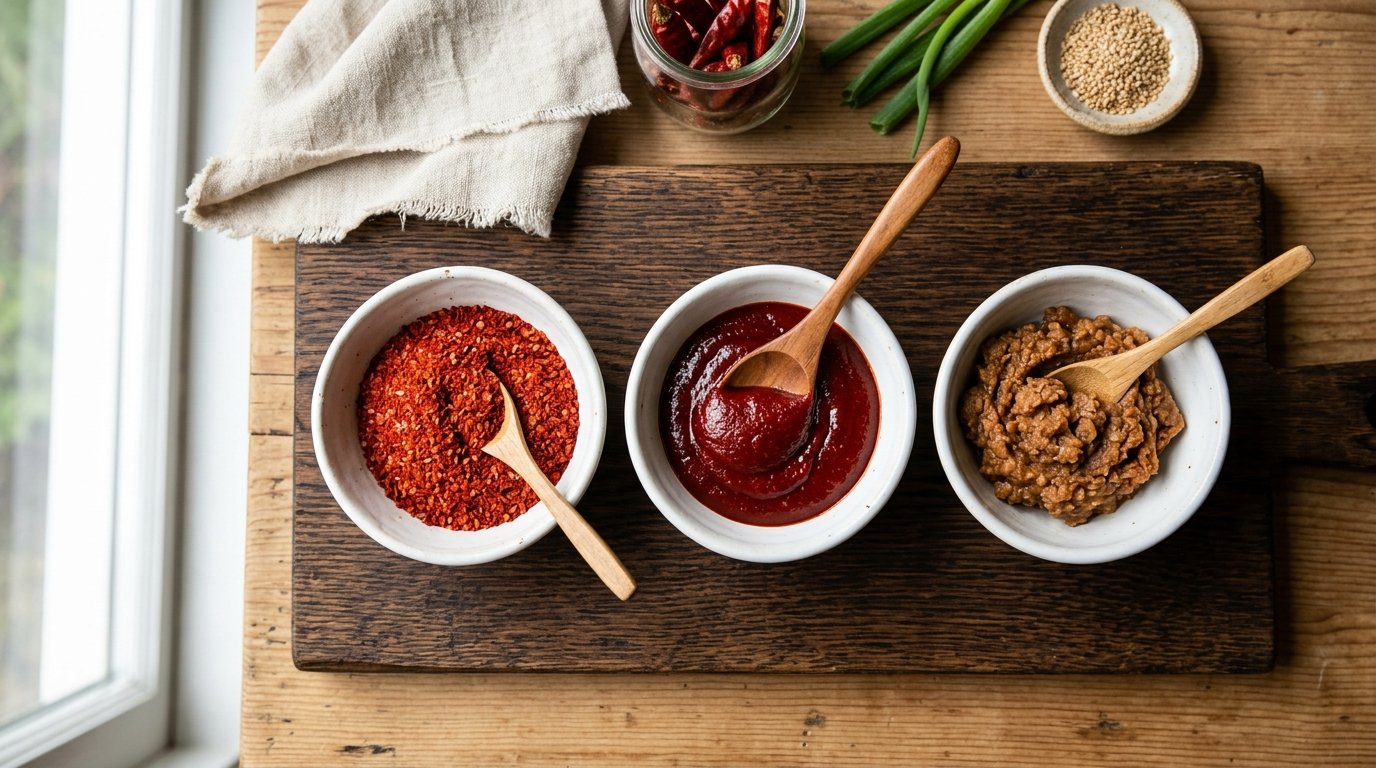
Three jars show up in almost every Korean recipe: a red powder, a thick red paste, and a brown paste that smells like nothing else in the fridge. They’re gochugaru, gochujang and doenjang. The names look similar and the colors overlap, which is exactly why they get mixed up. They are not interchangeable, and knowing what each one actually does changes how a stew, a banchan or a bowl of bibimbap turns out.
What gochugaru is
Gochugaru is Korean red pepper, sun-dried and ground, and nothing else. Unlike standard chili powder, gochugaru is not blended with other spices, it is pure chili. It comes in two grinds that are not interchangeable in texture: coarse flakes that hold texture and keep working through fermentation, used in kimchi where it coats leaves evenly, and fine powder that dissolves smoothly and colours the whole liquid, used in gochujang, soups and marinades. If a bag doesn’t say which one it is, Korean cooks default to coarse.
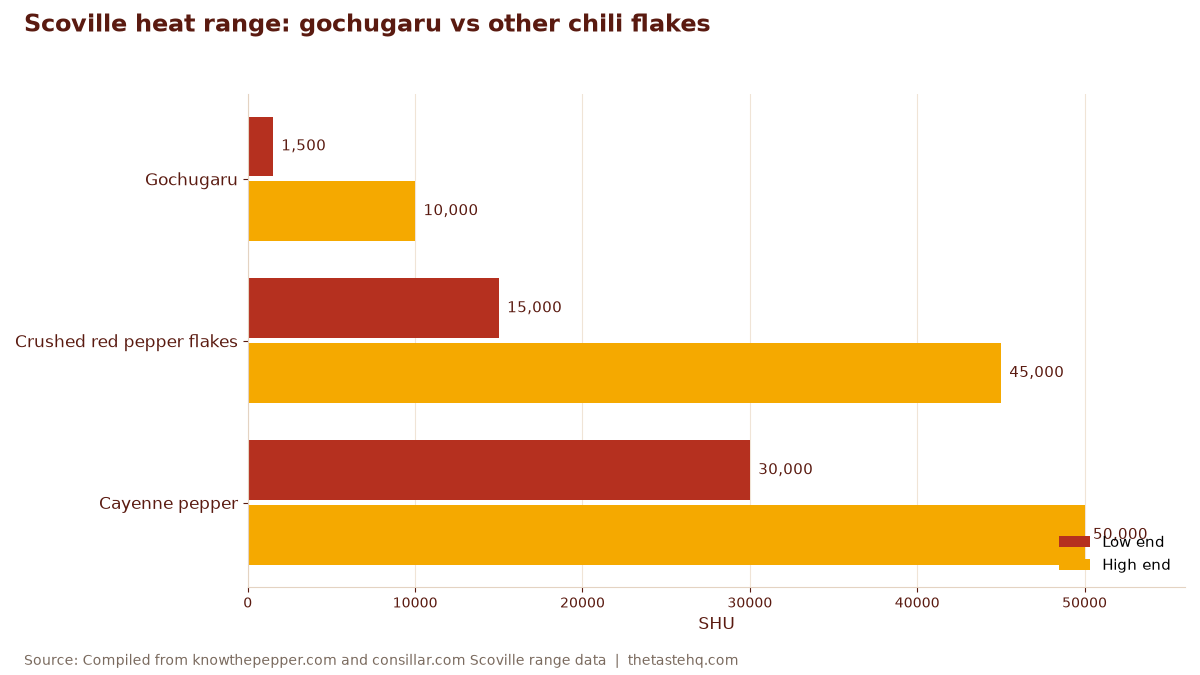
On heat, gochugaru sits well below the chili flakes in a pizza shaker. Most sources put it at 1,500 to 10,000 Scoville units, significantly less than cayenne at 30,000 to 50,000 or standard dried chili flakes at 20,000 to 30,000. That lower heat is what lets a kimchi recipe call for a full cup of it without becoming unbearable. The flavor leans fruity and faintly sweet before any burn arrives, with a soft smokiness from the sun-drying.
What gochujang is
Gochujang is a fermented paste, not a spice. Gochujang is a thick paste fermented from chili powder, glutinous rice, soybeans and salt. The rice and soybeans are what separate it from gochugaru entirely: fermentation turns raw chili heat into something rounder, with sweetness from the rice starches and savoriness from the soybeans. Heat-wise, gochujang is actually milder than straight gochugaru because the pepper is diluted with rice and soybean. It thins into sauces and glazes, clings to rice cakes in tteokbokki, and forms the base of most bibimbap sauces and bulgogi marinades.
A vinegared variant called chogochujang exists for raw-fish dishes, and ssamjang, the dipping paste served with grilled meat and lettuce wraps, is made of fermented soy beans, red chili paste, sesame oil, onion, garlic, green onions, and optionally brown sugar rather than gochujang on its own.
What doenjang is
Doenjang is Korea’s fermented soybean paste, and it carries no chili at all. Doenjang serves as Korea’s foundational soybean paste and one of the three essential jang that form the backbone of Korean cuisine. It gets compared to Japanese miso constantly, but unlike Japanese miso, which many Westerners mistakenly assume is identical, doenjang possesses a more robust, earthier, and saltier character that reflects Korea’s unique fermentation traditions. Its color ranges from golden tan to near-black depending on age, and the smell is funkier and more pungent than most people expect from a soybean product. It goes into doenjang-jjigae (the everyday soybean stew), into ssamjang, and into marinades where a savory, salty backbone is needed without any chili heat or sweetness.
How the three compare
| Pantry item | Form | Flavor | Best for |
|---|---|---|---|
| Gochugaru | Dry flakes or powder | Clean chili heat, fruity, mildly smoky, no salt | Kimchi, dry rubs, finishing stews and stir-fries |
| Gochujang | Thick, sticky fermented paste | Sweet, salty, umami, moderate heat | Sauces, marinades, glazes, tteokbokki, bibimbap |
| Doenjang | Chunky fermented paste | Intense umami and salt, earthy, no sweetness or heat | Doenjang-jjigae, ssamjang, savory marinades |
How to buy each one
For gochugaru, the main decision is grind, not brand. Pick up coarse for kimchi and most banchan, fine for sauces and smooth stews. A good bag is a bright, vivid red rather than brick or brownish; a dull or brownish powder indicates age or poor quality, and oxidation is the usual cause. Check the ingredient line: a bag of real gochugaru lists only chili pepper, no salt, sugar or anti-caking agent folded in. Origin is marked on most Korean bags as domestic or imported; domestic costs noticeably more and is generally considered better in flavor, while imported gochugaru is perfectly usable for everyday cooking. Neither is wrong, just know which one you’re buying and adjust the amount if the bag feels coarser or finer than you expected.
For gochujang and doenjang, tubs are more common than jars, and both should list fermented soybeans, chili powder (for gochujang), rice or grain, and salt near the top of the ingredient list. Skip versions padded heavily with corn syrup or msg if you’d rather taste the fermentation itself. A longer fermentation time on the label generally points to a deeper, less one-note paste, though home cooks rarely need to chase that detail for everyday stews.
How to store it
Gochugaru fades and loses punch when it sits in light and warmth, so keep it in an airtight container away from the stove, and move it to the fridge or freezer if the kitchen runs warm; the color is usually the first thing to go dull, and that’s a sign the flavor is following. Gochujang and doenjang are both salted ferments, which makes them stable, but once opened they belong in the fridge, pressed flat under plastic wrap or their own lid to limit air contact. Once opened, refrigerate to preserve freshness; gochujang can last up to 6 months in the fridge, while gochugaru remains good for up to a year. Doenjang, being a drier, saltier ferment, generally holds at least as long as gochujang in the fridge and often longer, since its texture doesn’t separate the way a sweeter paste can.
Common mistakes
- Treating gochugaru and gochujang as swaps for each other. One is a spice and the other a condiment, so they are not interchangeable, though plenty of Korean dishes use both. Swapping without adjusting salt and sugar throws off the whole dish.
- Grabbing generic chili powder instead of gochugaru. Pre-mixed American-style chili powder usually contains cumin, oregano and garlic powder, which changes the dish’s flavor entirely, not just its heat.
- Using fine gochugaru where a recipe wants coarse, or the reverse. Fine powder dissolves too quickly and can make dishes muddy or overly spicy, so always buy coarse gochugaru labeled gochugaru from a Korean source if a recipe calls for it.
- Letting gochugaru scorch in hot oil. It burns and turns bitter fast; stir it into oil off the heat or over low heat for a few seconds before adding liquid.
- Forgetting gochujang’s built-in salt. It’s a seasoned paste, not a neutral chili base, so taste before adding extra soy sauce or salt to a marinade.
- Leaving opened tubs out of the fridge. Both pastes keep for months refrigerated, but warmth speeds up fermentation and can push the flavor sourer than intended.
Gochugaru substitutes that actually work
Gochugaru’s particular mix of mild heat, fruitiness and light smoke is hard to copy with a single pantry item, so start small and taste as you go rather than dumping in a full swap.
| Substitute | Ratio to gochugaru | What you’ll notice |
|---|---|---|
| Aleppo pepper flakes | 1:1 | Works especially well in kimchi-making and in sauces where gochugaru is a primary ingredient, with a fruitier, less smoky edge. |
| Crushed red pepper flakes | Use about 1/4 to 1/3 the amount | Made from varieties that include seeds, which makes them significantly hotter and more one-dimensional in flavor than gochugaru. |
| Smoked paprika (plus a pinch of cayenne for heat) | 1:1 | Good color and smokiness, but no real chili heat on its own. |
| Gochujang, thinned with a little water | Roughly 3/4 the amount, cooked dishes only | Can stand in when thinned with liquid, but you lose the clean chili flavor of the powder and gain the paste’s sweetness and salt. |
| Ancho or New Mexico chili powder | 1:1 | Milder and earthier, a reasonable stand-in for stews and braises where fruitiness matters more than heat. |
None of these substitutes are right for the reverse direction. Gochugaru cannot supply the body or fermented umami a recipe expects from gochujang, so if a recipe calls for the paste, reach for the paste, or a small amount of doenjang mixed with a little sugar and chili flakes as a rough patch for a sauce in progress.
Sources
- Source: Gochujang vs Gochugaru: Korea’s Two Chili Stars Explained
- Source: Gochujang vs. Doenjang vs. Ssamjang: Understand the Difference
- Source: Ssamjang, Wikipedia
- Source: Gochujang, Wikipedia
- Source: Gochujang vs Gochugaru — Differences Explained
- Source: Out of Gochugaru? 9 Substitutes That Actually Work
- Source: Gochugaru vs Gochujang: Understanding the Difference and Uses
- Source: Best Gochugaru Substitutes: 7 Alternatives Ranked by Flavor, Heat, and Texture
- Source: Gochugaru: What It Is, Which Grind to Buy & Substitutes
- Source: Gochugaru: Korean Chili Flakes Explained
- Source: Gochugaru: 1.5K-10K SHU, Korean Red Pepper Uses
- Source: Gochugaru: Uses, Substitutes, and Storage Tips